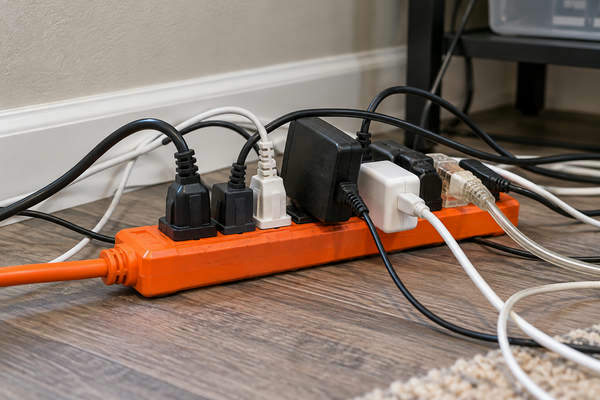
Extension cords are a common sight in homes, often used to power devices temporarily. While they offer convenience, relying on them for long-term use can pose significant safety risks. Understanding the correct application of extension cords is crucial for homeowners and property buyers to ensure safety and compliance with electrical standards.
Understanding the Limits of Extension Cords
Extension cords are designed for short-term use and should not replace permanent wiring solutions. They are typically rated for temporary applications, providing power to devices when an outlet is temporarily inaccessible. Key considerations include:
- Load Capacity: Exceeding the cord’s load capacity can result in overheating and potential fire hazards. It’s important to match the cord’s rating with the device’s electrical demands.
- Environmental Conditions: Outdoor-rated cords should be used when exposed to weather conditions, as indoor cords lack the necessary insulation and protection.
- Physical Damage: Cords can suffer from wear and tear, leading to exposed wires and increased risk of electrical shock or fire.
Practical Tips for Safe Use
Homeowners should follow best practices to mitigate risks associated with extension cords:
- Avoid running cords under carpets or through doorways where they can be pinched or damaged.
- Use cords with sufficient length to eliminate tension or stress at connection points.
- Regularly inspect cords for visible damage, such as fraying or cracking insulation.
- When a permanent power source is necessary, consider hiring a licensed electrician to install additional outlets.
Industry Standards and Recommendations
Recognizing the temporary nature of extension cords is emphasized in various guidelines and safety standards. For instance, the National Electrical Code (NEC) provides directives on the safe use of flexible cords, underscoring the preference for permanent wiring solutions in residential settings.
In summary, extension cords should be treated as temporary solutions, with careful attention to load capacity and environmental conditions. Engaging professional inspection services can help homeowners identify potential hazards and ensure compliance with electrical safety standards. Regular inspections can provide peace of mind and maintain a safe living environment.